

How Precast Detailing Transforms Parking Garage Projects
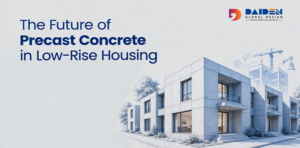
As urban populations grow and housing demand increases, the construction industry is under pressure to deliver faster, more affordable, and sustainable residential solutions. Low-rise housing typically buildings of up to four stories has emerged as a key model for balancing density with livability. In this evolving landscape, precast concrete is rapidly gaining recognition as a transformative technology that will shape the future of low-rise residential construction.
Rising Demand for Efficient Housing Solutions
Low-rise housing is often considered the “missing middle” between single-family homes and high-rise apartments, offering both community living and human-scale design. However, traditional construction methods struggle to keep up with the growing demand for such developments. Labor shortages, rising material costs, and project delays have pushed developers to explore more efficient building techniques.
Precast concrete addresses these challenges by enabling faster, more predictable construction. Since components are manufactured off-site in controlled environments, projects can proceed simultaneously with site preparation, significantly reducing timelines.
Speed and Scalability for Housing Development
One of the most significant advantages of precast concrete is its ability to accelerate construction. Precast elements such as wall panels, slabs, and staircases are produced in advance and assembled quickly on-site. This can reduce construction timelines by up to 50% in some cases, making it an ideal solution for large-scale housing developments.
For low-rise housing projects, where multiple units are often built simultaneously, this speed translates into faster occupancy and quicker returns on investment. Developers can scale projects more efficiently, meeting housing demands without compromising quality.
Check here check Offshore Precast Detailing and BIM Modeling Services in US !
Cost Efficiency and Reduced Labor Dependency
Cost control is a major concern in residential construction. Precast concrete offers long-term cost benefits by reducing labor requirements, minimizing material waste, and lowering maintenance expenses. Studies suggest that precast construction can significantly reduce labor costs due to faster installation and fewer on-site activities.
Additionally, factory-controlled production ensures consistent quality, reducing the likelihood of errors and rework. This predictability is especially valuable in low-rise housing, where developers often work within tight budgets and timelines.
Sustainability and Environmental Benefits
Sustainability is becoming a central focus in modern housing design, and precast concrete aligns well with green building goals. The manufacturing process generates less waste and allows for efficient use of materials, including recycled content.
Precast systems also offer excellent thermal insulation, improving energy efficiency in residential buildings. This reduces heating and cooling costs for homeowners while contributing to lower carbon emissions. As governments and developers prioritize sustainable construction, precast concrete is expected to play a crucial role in meeting environmental targets.
Design Flexibility and Modern Living Standards
Contrary to the misconception that precast limits design, modern technologies such as BIM and advanced manufacturing techniques have expanded its architectural possibilities. Precast components can be customized in various shapes, finishes, and configurations, allowing for aesthetically appealing and functional housing designs.
In low-rise housing, this flexibility enables the creation of diverse layouts, from townhouses to multi-unit residential blocks, while maintaining structural efficiency and durability.
When decorative concrete features are part of the project scope, detailed documentation becomes just as important as structural coordination. Professional cast stone shop drawing services help ensure each component is manufactured exactly as designed
Integration with Future Technologies
The future of precast concrete is closely tied to technological advancements. Innovations such as automation, artificial intelligence, and 3D printing are enhancing the precision and efficiency of precast manufacturing.
Additionally, smart precast elements embedded with sensors can monitor structural performance in real time, improving safety and maintenance planning. These advancements will further strengthen precast concrete’s role in next-generation housing solutions.
Conclusion
The future of low-rise housing is being shaped by the need for speed, affordability, and sustainability and precast concrete meets all these demands. Its ability to deliver high-quality, durable structures quickly and efficiently makes it a powerful solution for modern residential development.
As technology continues to evolve and the demand for housing grows, precast concrete is set to become a cornerstone of low-rise construction, enabling developers to build smarter, faster, and more sustainably for the communities of tomorrow.
Thank you for your reading. Join the conversation by posting a comment.